

Incarnation in metaphor
How the Meaning of everything became a Man who could be misunderstood; and other metaphors about Jesus.

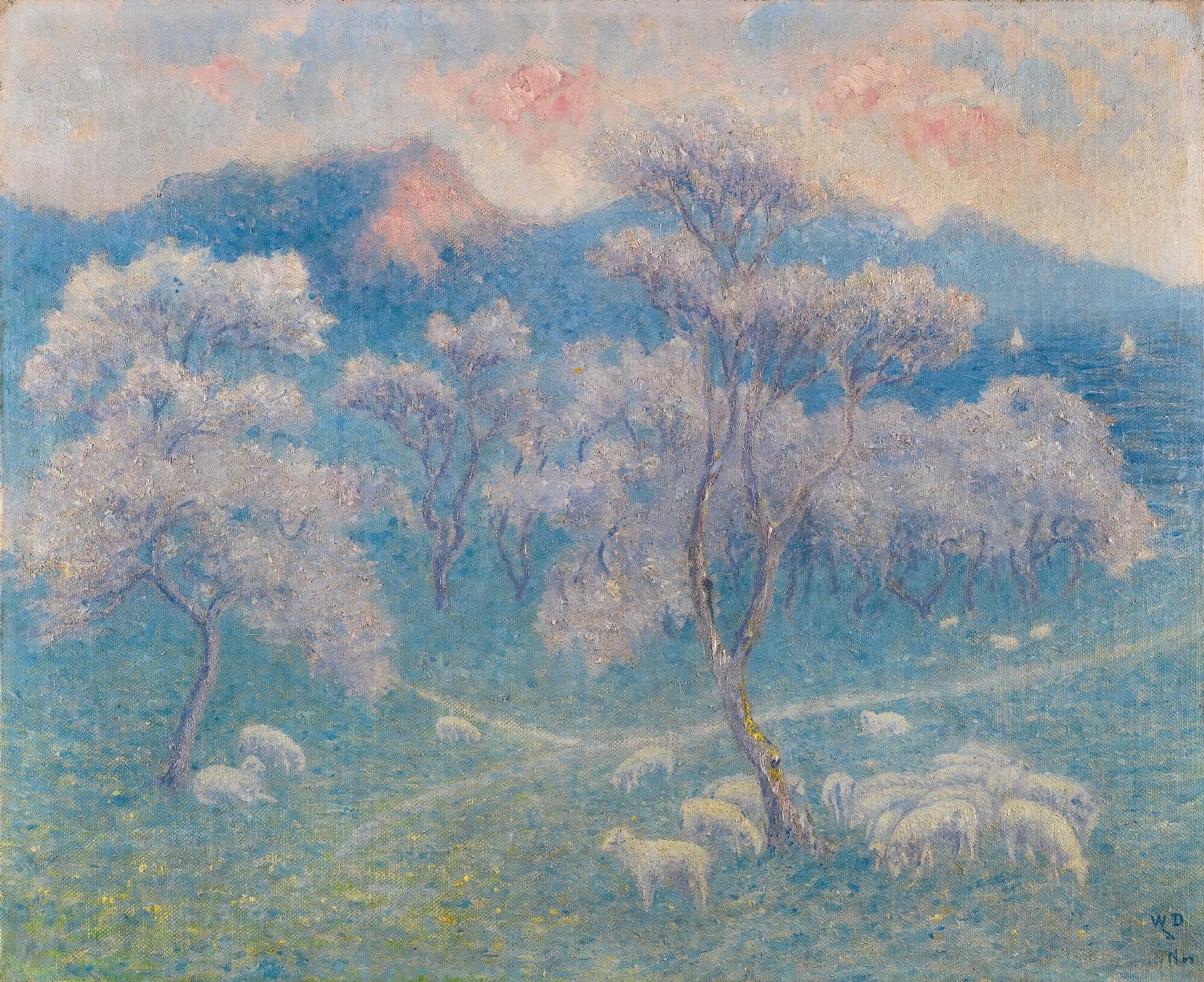
Just before dawn in Cape Town, the city is still and asleep and the mountains lie dark. Slowly, the sky turns colour as the sun rises over the eastern suburbs and the distant Helderberg mountain ranges towards Stellenbosch. If it is a morning with no mist, it is glimmeringly and magnetically beautiful.
I love this time of day, because it is not yet light, yet it is the suggestion of light. You have this memory of light, held inside the darkness for a moment. The soft skin on your wrists and the tops of your ears catch a warm glow, permeating from a horizon that has not yet become the Day. Yet, you now know that the night has always been temporary. I often sit, looking for these signs of sunlight from my parked car, when I arrive at work in the winter. The day is about to begin. The night is over.
Have you ever experienced this? Just, watching it happen, feeling the inadequacy of how to put the beauty of a Sunrise into words.
I tell you, this is what the Incarnation is like.
The birth of Jesus is like the first suggestion of Dawn after a very long night. It is like all the light in the universe being gathered into a single Point, and placed, somehow (and without contradiction), into the specific, unremarkable darkness of that first-century stable.
For this essay, you’ll notice that I am taking a little detour in terms of my usual structure, but I was really keen to write a challenging piece like this.
Simply put, I have put together a number of pictures and metaphors to try and paint what the coming of Jesus Christ was like. The pictures are: Light, Word, Author, King and Seed.
Real quick, I also need to be honest with you.
Every image I have tried to come up with for the Incarnation is simultaneously both true and insufficient. Every metaphor reaches toward the truth of God in flesh and yet falls short. Every analogy illuminates one face of the thing and leaves the others in shadow. The Incarnation is the event for which (I believe) all of human language has been, from the very Beginning, inadequately equipped. Ultimately, we as human beings are inadequately equipped when met with an extraordinary, beautifully-perfect God.
God is ultimately beyond all our human categories.
However, language is partly all you and I have, and the attempt to find images for the coming of Christ is, I think, one of the most seriously human things we can do. May it all be worship.
So, let us try.1
Jesus, the Light that was not diminished.
All the light of the world distilled into a single candle and yet being no less Bright.
The Light shines in the darkness, and the darkness has not overcome it.2
This, I think, is the most important thing the Incarnation asks us but also helps us to believe. In Jesus, God became a man. That part is difficult enough for our minds, but, at the very least, it is a statement about what happened. When I think about it, the harder claim is the one underneath, that in becoming a man, God did not become any less God. It’s like a candle containing the Light of the sun without reducing the sun. In Jesus, the particular man did not diminish the infinite God. Surely, in the very same moment, the Infant in Bethlehem was holding the whole universe together.
Theologians much smarter than me (for I am not an expert at all) call this the “hypostatic union,” which is the doctrine that Jesus is fully God and fully human, not a mixture of the two and not 50% of each. Jesus is the complete and undivided reality of both held together in one Person.3 My mind tries to quantify and measure Jesus Christ, but we need a willingness to hold these two things simultaneously, when our minds would much prefer to resolve this Mystery.
A candle is a source of Light, and not just a reflection or a representation of light. It is Light itself, coming from itself and illuminating the things around it. The sun exists independently of the candle’s existence. But even this metaphor breaks down, as all metaphors eventually must, because the candle and the sun are two separate things. The Incarnation is not two separate things, but it is one thing, being one Person, both God and man in Jesus.
The early church spent three hundred years working this out. I believe these were some of the most serious problem-solving sessions human beings have ever had about anything at all, because the stakes are not abstract. On the one hand, if Jesus is not fully God, then the Cross does not accomplish what Christians claim it accomplishes, since a finite sacrifice cannot bear an infinite weight. On the other hand, if Jesus is not fully human, then the Incarnation is just a performance for history, being a visitation from a Being who was never really here, never really born and never really hungry, afraid or weeping at the tomb of a friend. Jesus is the Hinge on which the entire story of history turns.4
Jesus, the Word becoming tangible.
I’ve used a line of his before, but we might know that John’s gospel begins before the Beginning.
In the beginning was the Word. God didn’t just speak a “word,” but in the beginning was the Word. The Word was God. The logos is the Greek term that carries with it the whole weight of the rational principle underlying the cosmos. It is the meaning that holds all of reality together. Jesus is claimed as the Reason things are intelligible and meaningful, rather than random. I love this verse later from Paul, that “God was pleased to have all His fullness dwell in Him.”5 This is what became flesh.
I have written much further into this idea in a previous essay, Do you suppose we’re in a story?

Imagine that all the meaning in the universe — every true sentence ever spoken or written or thought, every piece of music that has ever made sense of something that could not be said any other way, every poem that has reached the thing that prose cannot reach — imagine that all of this, the entire logos of reality, all that is good, true and beautiful, was somehow concentrated into a single Word. Then, if it were possible, imagine that Word being spoken into the world not as sound but as flesh in God becoming a man.
The meaning of everything became a Man who could be misunderstood.
This is the image that I find most beautiful, if we are to stretch the metaphor here, because God was willing to be misunderstood and willing to be misread. In Jesus, God takes the form of a located, culturally-embedded, historically-contingent life. We know, in reading of Jesus, that some people who encountered Him did not recognise who they were meeting. The infinite Meaning of the universe was walking past them on a road in Galilee and many just saw a carpenter’s son from Nazareth.
“Can anything good come from Nazareth?”6
The Word is reduced to a postal code which no one respects.
Jesus, the Author entering the story.
C.S. Lewis put this to paper in Mere Christianity. I remember reading it for the first time and it staying with me for ages. As a teenager, I had heard many people speak about Jesus, but not quite like this.
Imagine a play. The playwright has written every character, scene and word of dialogue, and therefore, the playwright naturally knows the story from the inside. He knows what every character is thinking, what will happen in the final act as well as the meaning of every scene that the characters themselves cannot yet see. The playwright is, in the fullest sense you could say, the “author of the world” the characters inhabit.
Now, try imagine the playwright writing himself into the play. And let us not get ahead of ourselves, the playwright does not make himself a “god-character,” and neither as an “all-knowing-narrator-type-figure.” He becomes a character who is subject to the same limitations as every other character, whereby he is able to be misunderstood by the other characters as they move through the same scenes and are subject to the same dramatic stakes.7
What is wonderful about this image is what it reveals about the playwright’s intention. You do not write yourself into your own story unless you intend to change it from the inside out. The deus ex machina is the hand of God reaching from the outside, wholly entering the narrative to rearrange the pieces altogether, making it a different kind of story. But I don’t think the Incarnation is that story. The coming of Christ is the story in which the Author puts down the pen and picks up the character’s life and lives it, from the inside, all the way to the ending.
Lewis understood something about the kind of God we can know, who is not a God who fixes things from a distance. Jesus is the God who enters the place that needs fixing, and fixes it by being in it. God does not describe suffering from the outside, but Jesus indeed suffers. He is the God who dies.
Jesus, the King who came in disguise.
It is time to tell a story.8
Once upon a time, there was a king who fell in love with a humble girl.
Now, the king could have summoned her to his palace, appearing before her in all of his power, declaring his love for her and overwhelming her with the evidence of his glory. But instead, the king understood something very simple.
Let us read the story together:
Suppose there was a king who loved a humble maiden. The king was like no other king. Every statesman trembled before his power. No one dared breathe a word against him, for he had the strength to crush all opponents. And yet this mighty king was melted by love for a humble maiden who lived in a poor village in his kingdom.
How could he declare his love for her?
In an odd sort of way, his kingliness tied his hands. If he brought her to the palace and crowned her head with jewels and clothed her body in royal robes, she would surely not resist-no one dared resist him.
But would she love him?
She would say she loved him, of course, but would she truly? Or would she live with him in fear, nursing a private grief for the life she had left behind? Would she be happy at his side? How could he know for sure?
If he rode to her forest cottage in his royal carriage, with an armed escort waving bright banners, that too would overwhelm her. He did not want a cringing subject. He wanted a lover, an equal. He wanted her to forget that he was a king and she a humble maiden and to let shared love cross the gulf between them. For it is only in love that the unequal can be made equal.
The king, convinced he could not elevate the maiden without crushing her freedom, resolved to descend to her. Clothed as a beggar, he approached her cottage with a worn cloak fluttering loose about him. This was not just a disguise – the king took on a totally new identity – He had renounced His throne to declare His love and to win hers.
— Søren Kierkegaard, 1844
Love produced by an overwhelming power is not love, but submission. It is the response of a creature to a force too great to resist or oppose.
The king in the story wanted to be loved freely. He wanted to be loved for himself and not for his crown. He came in disguise to give the maiden the freedom to choose him or not choose him.
Kierkegaard points us towards a captivating idea that God, who could have come in overwhelming power and compelled the worship of every creature, came instead, in the form that made true love possible. He came as a baby. Poor. As someone who could be refused.
This picture, I think, shows us that the Incarnation was partly chosen by God, before the foundation of the world, with the intention of preserving human freedom. We are free-will agents. God came in a form that could be rejected by our feeble minds and our timid hearts. Jesus came in a form that requires our faith rather than simply our observation. Jesus comes in a way that gives all of us the choice of whether to recognise Him.
Jesus, the Seed in the ground.
Jesus Himself told us of this next word-picture-parable-metaphor, near the end.
“Unless a grain of wheat falls into the earth and dies, it remains only a single seed.
But if it dies, it bears much fruit.”9
The image is ostensibly about His death but I think it is also about His life. Can you see it? In a way, it’s the whole shape of the Incarnation from beginning to end. God, who exists in glory and fullness and the eternal agape love of the Trinity, goes into the ground and takes on the darkness, the hiddenness and the apparent deadness of the buried seed. Jesus is placed in the soil of human history, in a corner of an empire, in a body that was beaten, mocked and scorned. He was cold, naked, thirsty, hungry and tired.
From His burial (the voluntary burial of the Infinite) comes everything.
The dead seed does not look like much when it goes into the ground, and you should know that the acorn does not look like the oak tree. The buried grain of wheat does not look like the harvest. The Infant in the manger does not look like the One in whom all the fullness of the Godhead dwells.
Yet.
The fullness is here and there is great Glory in the manger.
The metaphors all break at the same point.
Every image I have offered you (the Light, Word, Author, King and Seed) falls short at exactly the same point (except maybe, the last one).
They don’t quite capture what it cost.
The Incarnation cost something.
God was not impoverished by it, as I suppose God’s divine nature cannot suffer loss. But, let’s try together, in the sense that God, in becoming human, became the kind of Person that could be nailed to wood. Jesus cried out, My God, my God, why have you forsaken me? He experienced, from the inside, the cost of being a human being in a broken world. The cost for Jesus is not only being misunderstood, but also betrayed, abandoned and killed.
Paul says that Christ “emptied himself” in his letter, Philippians.
The Incarnation shows us the love of the Father, Son and Spirit, which is a mutual, self-giving, complete pouring-out-kind-of-love of one into another. Jesus shows the force, tenderness and motion of a fierce Love that holds nothing back. A Love that cost a whole lot.
What is God like, you ask?
Look at Jesus. Look at His whipped, stretched-out arms on that Roman cross in a gesture that was the most literal picture of Love.
The Incarnation is not just God’s fly-by visit to earth, like some romantic comedy where the characters jet-set off to an exotic location for their own leisure.
Jesus shows us the heart of the Father in the Vessel of a human life on earth.
The Cross is the true picture of where the cost becomes visible. It is not something to be fashionably worn about your neck. Yet, wear it, if you will remember the cost of Christ.
The Resurrection is where you can find out that the cost is not the end of the story.10
Some parting thoughts.
The beauty of Jesus is not difficult to describe because we have not yet “found the right words.” Rather, I am left with the idea that, we may never know, or have the right words to say, how much it cost to see our sin upon the Cross.
Every image that describes the Incarnation and falls short, is itself evidence that it is actually far more beautiful and more compelling than we could ever describe. Christ is more beautiful than language can contain and more compelling than metaphor can sustain. We, who have seen something of His glory, through a glass dimly and not face-to-face; not yet at least. I don’t think we are wrong to keep looking.
So come, writers. Come, poets. Come, painters, musicians, filmmakers, dancers, sculptors, photographers and storytellers.
Spend yourselves trying.
Write the poem that almost reaches Him. Paint the canvas that hints at His radiance. Compose the melody that catches, for a fleeting moment, the sound of Heaven. Make films and photographs that awaken longing. Build cathedrals of words, songs and colour that help weary eyes look again toward Christ.
Your work will never exhaust His beauty.
Every faithful attempt, however incomplete, becomes another window through which the Light of the world shines.
Thank you so much for reading my essay on ‘the breezy down’ — this is my writing corner on the internet.
If this essay did something to you, I’d love to know what. Please reply back and tell me who you are, what you’re reading, if you agree/disagree with the thoughts here and all the rest of it.
Also, if you want to share this essay with someone you love, please do.
— Jonny
The apophatic tradition in Christian theology (the via negativa, the way of negation) holds the idea that God is ultimately beyond all human categories and that the most honest theological statements are often the ones that say what God is not rather than what God is. Pseudo-Dionysius the Areopagite, writing in the fifth century, argued that the divine nature exceeds all affirmation and all negation simultaneously, meaning that even our negations fall short. We reach for the images knowing they will break, but we reach anyway.
John 1:5.
The doctrine of the “hypostatic union” was formally defined at the Council of Chalcedon in 451 AD, which declared that Jesus Christ is one Person in two natures (fully divine and fully human) “without confusion, without change, without division and without separation.” The four negatives are the boundaries of the Mystery and the places where various heresies had gone wrong. Apollinarianism had confused the natures. Nestorianism had divided the person. Eutychianism had changed the human nature by absorbing it into the divine, and the Council of Chalcedon said, none of these. The mystery is held, undivided and unconfused.
These stakes are worked out most carefully in Athanasius’s On the Incarnation (c. 318 AD), as C.S. Lewis noted in his introduction to a modern edition of this. Only God can save because only God has the resources to overcome death, and only a human being can die in the place of human beings, therefore, the Saviour must be both.
Colossians 1:19.
John 1:46. Nathanael’s response to Philip’s announcement that they have found the Messiah. Nazareth? I think the tone is untranslatable but unmistakable, with perhaps a slight contempt, some geographical snobbery or a reasonable-sounding dismissal. At the very least, there must have been confusion. Jesus has the postal address that nobody respects.
C.S. Lewis, Mere Christianity (Geoffrey Bles, 1952), Book II, Chapter 4. I need to say, Lewis uses the playwright image in the context of the atonement rather than the incarnation specifically, but I think the image works for both and Lewis clearly intends it to span the whole of Christ. His point is that the author who enters the story is the only possible solution to a story that has gone wrong from the inside. You cannot fix it from outside, but you have to get in.
Søren Kierkegaard, Philosophical Fragments (1844), Chapter II: The God as Teacher and Saviour: An Essay of the Imagination. The parable of the king and the humble girl deserves to be far more widely known than it is. Kierkegaard was writing under the pseudonym Johannes Climacus (one of his many pseudonyms, chosen with characteristic deliberateness). That name means, “John the Ladder-climber,” which is a reference to the seventh-century monastic writer whose Ladder of Divine Ascent described the soul’s climb toward God, but Kierkegaard’s inversion is that God climbs down.
John 12:24. The “unless a grain of wheat” saying appears in John in the context of Jesus’s discussion of his approaching death, immediately after the arrival of some Greeks who want to see him. John may have intended this as a signal that the mission to the nations is beginning. The image is agricultural and therefore rooted in one of the oldest human experiences of death and new life.
The theological tradition calls the suffering of God in the incarnation a kenosis (taken from Philippians 2:7, where Paul says that Christ emptied himself (ekenōsen), taking the form of a servant. Kenosis is a self-limitation that is itself an act of omnipotent love. God does not become less God by entering suffering. God expresses what God is (real Love) by entering suffering.
“Sir, we would like to see Jesus.”
Thank you for attempting to answer that plea with your writing Jonny. This piece has helped me get another glimpse of this multifaceted diamond, and I’m hungry for more…